

Jeju Island in 4 Days: Volcanoes, Forests & Hidden Gems 2026
Over 15 million visitors each year walk across Jeju's volcanic soil, making this island South Korea's most beloved domestic destination. Yet few truly leave understanding this unique territory, inscribed three times on UNESCO's World Heritage list. With just 4 days, it's entirely possible to capture Jeju's essence, from dormant craters and enchanting pine forests to Pacific-battered coastlines. Here's how to build a Jeju itinerary that goes beyond the postcard views.
Day 1: Arrival and Discovering the Oreum
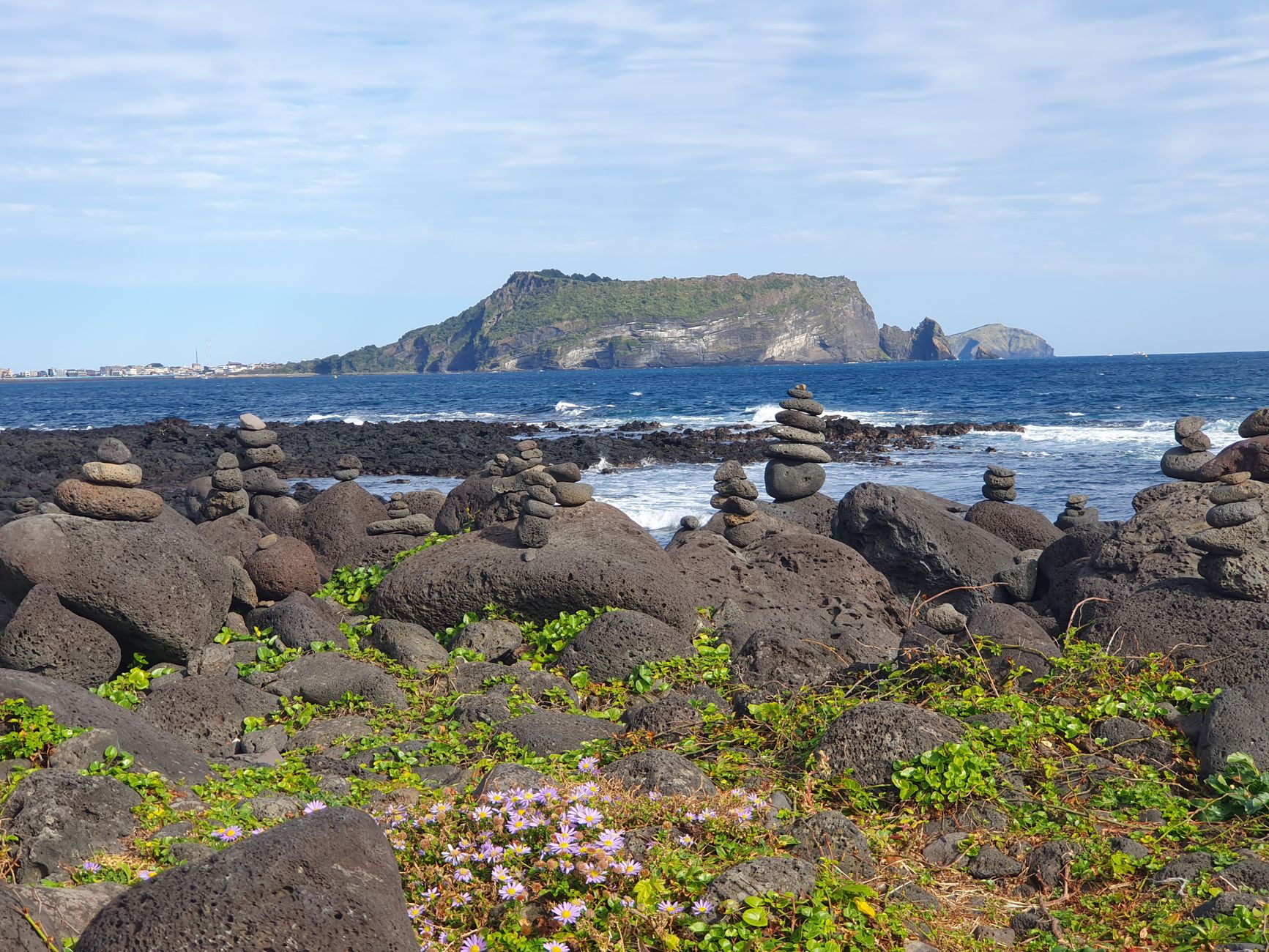
The plane touches down and the air feels different. Softer, more salt-tinged. Once you've claimed your bags, skip the airport shops entirely. Jeju is waiting outside. Your first afternoon should be devoted to discovering the oreum, those secondary volcanic cones that dot the landscape like benevolent bumps across a dreamlike terrain. Darangshi Oreum, on the island's east side, is among the most beautiful and least crowded early in your trip. The climb takes roughly 40 minutes and rewards you with a 360-degree panorama where sea, rapeseed fields, and Mount Hallasan converge in stunning harmony. That evening, head to Seongsan village for dinner overlooking Ilchulbong, the famous crater rising from the ocean like a natural fortress. Local haenyeo restaurants, serving the traditional women freedivers whose craft is UNESCO-listed, offer fresh sea urchin and grilled clams that rival any Brittany seafood feast.
Day 2: Seongsan Ilchulbong and the Eastern Coast
Sunrise at the Peak
Set your alarm for 5:30 am. No excuses. Seongsan Ilchulbong deserves its nickname as the "Sunrise Peak," and visiting it at noon like a rushed tourist would be a mistake. The climb from the main entrance takes about 20 minutes on a well-marked trail. At the summit, the crater opens like a vegetation-filled amphitheatre spanning 600 metres across. When the first rays break over the horizon across the East China Sea, you'll understand why this site has attracted photographers for decades. It's one of those moments that justifies the long flight from London or New York all by itself.
The Eastern Coast to Seopjikoji
After breakfast, the road hugs the eastern coastline toward Seopjikoji Cape. This wind-swept rocky headland, dotted with seasonal wildflowers, has served as the backdrop for several beloved Korean dramas. You can wander freely here without barriers or entrance fees, in the kind of rare liberation you'd find on wilderness trails rather than theme parks. Afternoon time goes to the Jeju Olle Trail, a network of coastal paths circling the entire island for over 250 miles. Section 1 traces Seongsan spectacularly and remains accessible even for casual hikers.
Day 3: Mount Hallasan, South Korea's Roof
Mount Hallasan rises to 1,950 metres, making it South Korea's highest peak. For a 4-day Jeju itinerary, dedicating an entire day here isn't luxury, it's essential. The Eorimok trail, starting from the northwest flank, is the most accessible route. Plan 4 to 5 hours round-trip to reach Witseoreum crater, a serene mountain lake ringed by Japanese beeches twisted by alpine winds. The atmosphere occasionally recalls certain peaks in the Scottish Highlands or Lake District, but in volcanic form, with that sensation of treading still-living earth beneath your feet. Note that trails to the main summit, Baekrokdam, operate on strict schedules and advance booking is now recommended for 2026. Before leaving the area, detour into Bijarim Forest, a natural cathedral of thousand-year-old boxwoods whose gnarled trunks cast shadows that seem pulled from a fairy tale reimagined in East Asia. To round out your Korea trip, consider pairing this with a visit to Seoul's highlights.
Day 4: Wild Western Coast and Lava Beaches
Volcanic Spirals and Secret Caves
Your final day belongs to Jeju's west, often overlooked in favour of the more touristy eastern coast. The Suwolbong peninsula is a geological masterpiece, with ochre-yellow volcanic tuff cliffs plunging 250 feet into turquoise sea, their colours shifting hour by hour. In raking morning light, the visual spectacle is extraordinary. Nearby, Manjanggul Cave is part of a 5-mile lava tube system, with just half a mile open to visitors. You'll walk through cool semi-darkness beneath ceilings bearing the imprints of lava flow from hundreds of thousands of years ago.
Hamdeok Beach and Your Farewell
If your flight departs in the evening, an afternoon at Hamdeok Beach offers a final immersion in Jeju's clear waters. Unlike the more crowded southern beaches, Hamdeok maintains a relaxed feel with cafes perched on rocks and working fishing nets still visible. It's perfect for a final local beer, gazing at the horizon, and mentally promising to return.
Practical Tips for Jeju in 2026
Renting a car is the smartest decision you'll make for a 4-day Jeju visit. Public transport exists but infrequent schedules make linking multiple sites daily difficult. Your UK or US driving licence is recognised in South Korea if officially translated before departure. For accommodation, Seongsan in the east and Hallim in the west offer solid bases depending on your priorities. Family-run guesthouses are often preferable to large chains for authentic insight into local Jeju culture. Finally, April, May, and September remain ideal months to visit, offering pleasant temperatures and lighting that magnifies volcanic landscapes without summer humidity.
A successful Jeju itinerary isn't about ticking boxes. It's built around your true interests, your pace, and what you genuinely seek from travel. Not generic. Yours, crafted from genuine South Korea travel experiences. Plan your Jeju trip →